Basement Framing & Insulation in Salt Lake City, Utah
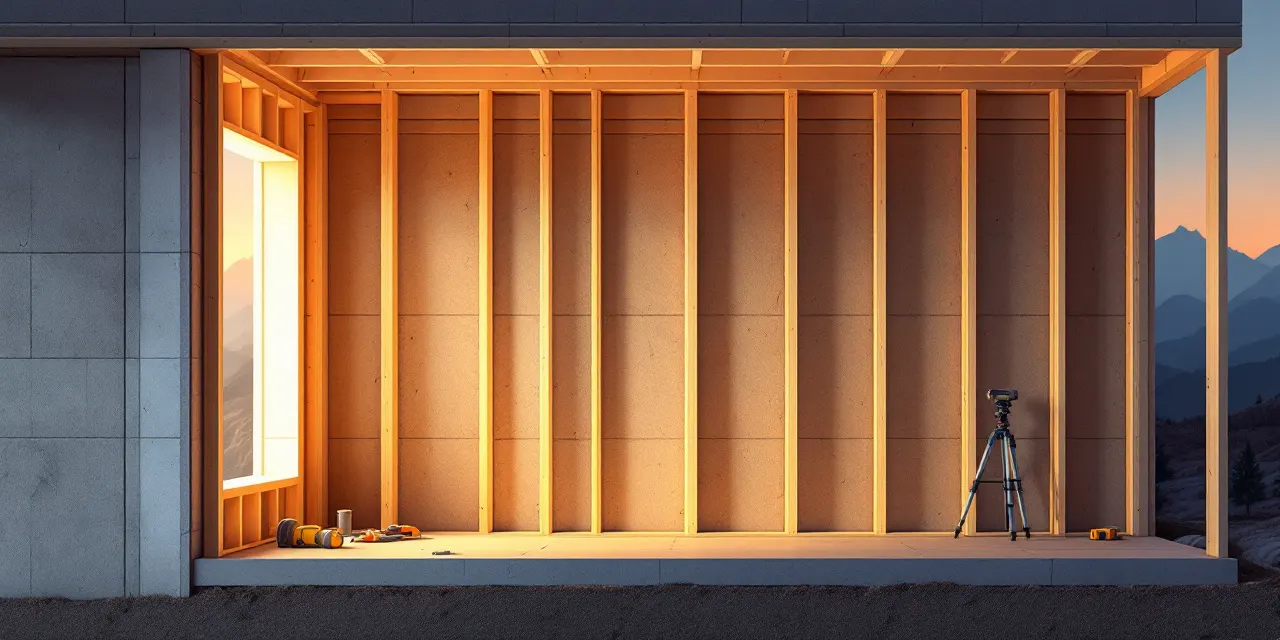
A finished basement starts with one thing done right: the framing and insulation. Get those wrong and you end up with cold floors, drafty walls, moisture problems, and a space nobody actually wants to spend time in. At Salt Lake Basement Pros, we coordinate every framing and insulation project through our licensed Salt Lake City partner crew, so you have one accountable team from the first measurement to the final inspection. Salt Lake City's climate puts real demands on below-grade spaces. Winters hit hard, summers bake the valley, and the elevation means temperature swings your basement walls feel every single day. Our local crew understands Utah's building codes, the way soil and moisture behave in this region, and which insulation strategies actually perform here, not just in a catalog.
Why Basement Framing Is the Foundation of Every Finished Space
Before drywall, flooring, or lighting goes in, the framing defines every room, closet, and utility chase in your basement. Walls framed even slightly off can create problems that ripple through every trade that follows. Our licensed Salt Lake City partner crew frames basements to local code, using pressure-treated lumber at the base plate where contact with concrete is unavoidable, and standard framing above that.
Proper framing also creates the cavity that holds your insulation. The depth and spacing of the studs, the placement of blocking, the way corners are built: all of it affects how well the finished basement performs thermally and acoustically. We plan framing and insulation together from the start so nothing gets compromised later.
For homeowners asking about basement framing cost in Salt Lake City, the honest answer is that it depends on square footage, wall length, ceiling height, and how many interior partition walls you need. The best way to get a real number for your specific basement is to request our free quote, and our crew will walk the space and give you a clear, itemized picture.
Basement Insulation in Salt Lake City: What Actually Works Here
Basement insulation in Salt Lake City has to handle a wide range of conditions. The ground temperature stays relatively stable, but rim joists, above-grade portions of foundation walls, and any walls facing an unheated garage or crawlspace are all vulnerable to heat loss. Our local crew evaluates each zone of your basement separately and recommends insulation types based on where moisture risk is highest and where thermal performance matters most.
Rigid foam board is commonly used directly against concrete foundation walls because it resists moisture and adds R-value without creating a gap where condensation can form. Batt insulation fits well inside framed stud cavities once a thermal break is in place. Spray foam is an option for rim joists and irregular gaps where air sealing is just as important as insulation value. Our crew will explain the tradeoffs for your specific basement layout before any work begins.
One thing we take seriously is vapor management. Utah's dry climate can lull homeowners into skipping proper vapor control, but concrete walls do allow moisture migration, and finished basements that trap that moisture eventually show it, usually behind the drywall. We insulate in a way that lets the assembly dry in the right direction and keeps your finished basement performing well for years.
Basement Soundproofing in Salt Lake City
If your basement is going to be a home theater, a music room, a kids' hangout, or a home office, soundproofing belongs in the conversation before framing is ever started. Sound control is much easier and cheaper to build in during initial construction than to retrofit later. Our licensed Salt Lake City partner crew has experience incorporating acoustic insulation, resilient channels, and decoupled wall assemblies into basement builds when clients want real noise reduction.
Basement soundproofing in Salt Lake City typically focuses on two problems: impact noise traveling down from the main floor, and airborne sound either contained in or kept out of the basement. The solutions are different for each. Ceiling assemblies get the most attention for impact noise, while wall assemblies matter more for airborne sound. When you request a quote, let our crew know how the space will be used and they will factor sound control into the framing and insulation plan from day one.
What to Expect When You Work With Our Local Crew
When you contact Salt Lake Basement Pros, we connect you directly with our licensed Salt Lake City partner crew. There is no shuffling between multiple contractors and no competing bids to sort through. One crew, one point of contact, one clear quote for your project.
The process starts with a free, no-obligation quote visit. The crew walks your basement, takes measurements, notes any existing conditions like water staining, HVAC placement, or low-clearance beams, and puts together a written scope. You will know what is included, what materials are planned, and what the timeline looks like before you commit to anything.
Once work begins, our crew handles framing and insulation as a coordinated sequence so inspections are scheduled at the right stages and nothing has to be opened back up later. We work within Salt Lake City's permitting requirements and pull the necessary permits so your finished basement is documented correctly, which matters when it comes time to sell the home.
FAQ
How much does basement framing cost in Salt Lake City?
Basement framing cost in Salt Lake City varies based on the total linear footage of walls, the number of interior rooms or partitions, ceiling height, and any special structural considerations. There is no honest flat rate that covers every basement. The most reliable way to get a real number is to have our licensed local crew walk your space and provide a written quote, which we offer for free with no obligation.
What type of insulation is best for a Salt Lake City basement?
It depends on which part of the basement you are insulating. Rigid foam board works well directly against concrete foundation walls because it manages moisture and adds R-value. Batt insulation is commonly used inside framed stud cavities. Spray foam is often the right choice for rim joists and gaps where air sealing matters as much as thermal performance. Our local crew will assess your specific basement and recommend the right approach for each zone.
Do I need a permit for basement framing and insulation in Salt Lake City?
In most cases, yes. Finishing a basement, including framing new walls and adding insulation as part of a livable space, typically requires a building permit in Salt Lake City. Our licensed partner crew handles the permitting process and schedules inspections at the appropriate stages so your project is fully documented and up to code.
Can soundproofing be added to a basement that is already framed?
Some soundproofing measures can be retrofitted, but they are more limited and more expensive than building them in from the start. If the framing is already in place, options like adding mass-loaded vinyl or resilient channel to an existing wall assembly are possible. However, for serious sound reduction, especially for a home theater or music room, the most effective and cost-efficient approach is to plan it during the framing stage. If your basement has not been framed yet, that is the right time to bring it up.
How long does basement framing and insulation take?
Timeline depends on the size and complexity of your basement, permit processing time, and any site conditions our crew encounters. A straightforward framing and insulation scope in an open rectangular basement will move faster than a basement with multiple rooms, low beams, or existing mechanical systems to work around. Our crew will give you a realistic schedule estimate as part of the free quote process.