Basement Bathroom Installation in Salt Lake City
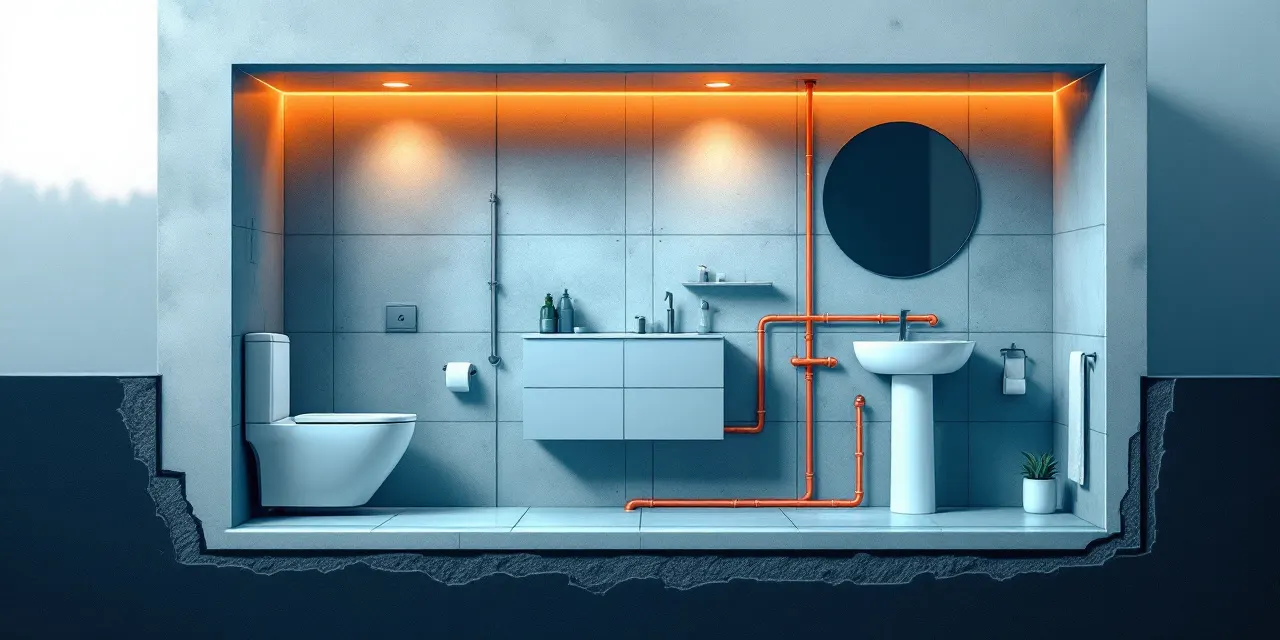
A finished basement without a bathroom is only half the story. Whether you're converting your lower level into a guest suite, a rental unit, or a family hangout space, adding a basement bathroom in Salt Lake City makes the whole project genuinely livable. At Salt Lake Basement Pros, we connect you with our licensed Salt Lake City partner crew to handle every part of the job, from rough-in plumbing to the final tile grout. Basement bathrooms come with specific challenges that above-grade work doesn't, and local experience matters here. Utah soil conditions, our local building codes, and the realities of below-grade drainage all factor into how the job gets planned and executed. Our local crew works in Salt Lake City homes regularly and knows exactly what inspectors expect and what layouts actually function well in a basement setting.
What Goes Into a Basement Bathroom Build
Adding a bathroom below grade is more involved than a standard bathroom remodel because the drainage has to work against gravity. In most Salt Lake City basements, that means installing an ejector pump system or a macerating toilet setup to move waste up to the main sewer line. Our licensed Salt Lake City partner crew assesses your existing plumbing stack and basement floor before recommending the right approach for your specific home.
Beyond plumbing, the work typically includes framing the bathroom walls, running electrical for outlets and ventilation, installing a GFCI-protected circuit, and making sure the space is properly vented to prevent moisture buildup. Moisture control is not optional in a Utah basement bathroom. Proper ventilation and the right moisture-resistant materials behind the tile are the difference between a bathroom that holds up for decades and one that causes headaches in a few years.
Our local crew walks you through fixture choices, layout options, and finish selections before any work begins. You get a clear scope and a single point of contact throughout the project, not a rotating cast of subcontractors you've never met.
Basement Bathroom Layouts That Actually Work
Space is often tight in a basement bathroom, so layout planning is one of the most important parts of the job. A three-quarter bath (toilet, vanity, and shower) is the most popular choice for basement finishing projects in Salt Lake City because it covers all the practical needs without requiring the square footage of a full tub installation. That said, if your basement footprint allows for it, a full bath adds real value, especially if the space will serve as a guest bedroom or an ADU.
Our Salt Lake City partner crew has worked through a wide range of basement configurations and can help you maximize a smaller footprint or take full advantage of a more generous space. Corner showers, pocket doors, and wall-hung vanities are all tools that make compact basement bathrooms feel comfortable and functional. The goal is a bathroom that works well for real daily use, not just one that photographs well.
Permit requirements in Salt Lake City mean the layout also has to meet minimum clearance standards for fixtures. Our crew handles the permitting process as part of the project, so you don't have to navigate city building departments on your own.
Permits, Inspections, and Building Code in Salt Lake City
Basement bathroom work in Salt Lake City requires a building permit, and skipping that step creates serious problems when you go to sell your home or make an insurance claim. Our licensed Salt Lake City partner crew pulls the appropriate permits, schedules inspections, and makes sure the finished bathroom passes without issue. This protects your investment and keeps your home's records clean.
Utah's plumbing code and Salt Lake City's local amendments both apply to below-grade bathroom work. Requirements around ejector pits, venting, and electrical placement are specific and non-negotiable. Working with a licensed crew that knows the local inspection process means the work is done right the first time rather than flagged and redone after the fact.
If you've had bids from unlicensed workers that don't mention permits, that's a warning sign worth taking seriously. The savings on paper rarely hold up once you account for the risk.
How Salt Lake Basement Pros Handles Your Project
When you reach out to Salt Lake Basement Pros, we set you up with a free no-obligation quote from our licensed Salt Lake City partner crew. One crew, one conversation, one clear proposal. There's no back-and-forth with multiple strangers showing up at your door, and there's no pressure to decide on the spot.
Our local crew visits your basement, reviews the existing plumbing and electrical, talks through your goals for the space, and gives you a written quote that covers everything. If you have questions after the visit, you're talking to the same people who will do the work. That kind of direct accountability is something we take seriously at Salt Lake Basement Pros.
Scheduling moves quickly once you're ready to proceed. Our partner crew works locally and doesn't have projects spread across multiple states, which means their calendar reflects what's actually happening in Salt Lake City right now.
FAQ
How much does a basement bathroom cost in Salt Lake City?
The cost depends on the size of the bathroom, the fixture choices, and whether your basement requires an ejector pump or already has a suitable drain rough-in. A three-quarter basement bathroom is typically less expensive than a full bath with a soaking tub. The best way to get an accurate number for your specific basement is to request a free quote from our licensed Salt Lake City partner crew, who can assess the space in person.
Do I need a permit to add a bathroom to my Salt Lake City basement?
Yes. Basement bathroom additions in Salt Lake City require a building permit covering both the plumbing and electrical work. Our licensed local crew handles the permit application and inspection scheduling as part of the project. Skipping this step can cause complications when you sell your home or need to make an insurance claim.
How long does a basement bathroom installation take?
A typical basement bathroom build takes anywhere from a couple of weeks to several weeks depending on scope, permit turnaround times, and the complexity of the plumbing rough-in. Projects that require breaking concrete for new drain lines take longer than those with an existing rough-in stub. Our local crew gives you a realistic timeline estimate during the quote visit.
Does my basement need an ejector pump for a bathroom?
Most Salt Lake City basements sit below the main sewer line, which means an ejector pump is needed to move waste upward to connect with your home's sewer system. Some homes were built with a basement bath rough-in that already accounts for this. Our licensed Salt Lake City partner crew checks your plumbing situation during the quote visit and recommends the right solution for your home.
Can a basement bathroom be added to a partially finished basement?
Absolutely. Whether your basement is fully unfinished, partially finished, or already framed out but lacking plumbing, our local crew can assess what's already in place and work around existing features. Partially finished basements sometimes already have an electrical subpanel or framing that reduces the overall scope of the work.